.png)
Love≠Comedy: Much More Than Just Another Romantic Comedy
Review by Delhia – Updated on July 22, 2026
July 3, 2026, starring Nakajima Kento as Kanzaki Reiji and Nagahama Neru as Minamikaze Misato.
As a fan of Nakajima Kento, there was no way I was going to miss his latest film. But beyond his performance, it was the concept and originality of Love≠Comedy that made me want to share my thoughts. Love≠Comedy est un film de Storm Films, sorti le 3 juillet 2026, avec Nakajima Kento dans le rôle de Kanzaki Reiji et Nagahama Neru dans celui de Minamikaze Misato
Trailer :
Love≠Comedy: Just Another Romantic Comedy?
At first glance, Love≠Comedy looks like a typical romantic comedy starring a popular idol. In reality, that's not really what the film is about. Romance is certainly part of the story, but it becomes surprisingly secondary, especially in the latter half of the film. Instead, the movie focuses on acting, filmmaking, the romantic comedy genre itself, and how it is perceived by both audiences and the industry.

The main character, Kanzaki Reiji, played by Nakajima Kento, is a hugely popular idol known for starring in one romantic comedy after another. Once again, he is cast as the lead in a new film titled Kabe Don! Yuka Don! Kimi ni Dooon!
Although Reiji takes acting seriously, his greatest wish is to be recognized for his talent rather than his popularity. He dreams of winning awards and being respected as a true actor. However, over the years, he begins to believe that he is cast mainly because of his good looks. Little by little, he starts shaping his personality around the image everyone expects him to project.
How can he be recognized for his talent instead of his appearance? How can he land a more demanding, dramatic role and finally prove what he is truly capable of?
Opposite him is Minamikaze Misato, portrayed by Nagahama Neru, another popular idol. Unlike Reiji, she approaches the project with complete sincerity. For her, this romantic comedy is an important milestone in her career, but it also holds deep personal meaning.
The contrast between their attitudes creates an engaging dynamic throughout the film. As they spend more time together, Misato gradually challenges Reiji's view of both acting and himself, encouraging him to grow as both an actor and a person.
Love≠Comedy : A Film With Multiple Layers
After watching the trailer, I expected a story about an idol who is tired of starring in romantic comedies but, because he hates to lose, eventually decides to give the role his all. I also expected a fairly conventional romance with performances that leaned into the usual genre clichés.
While that premise is certainly part of the film, stopping there would, in my opinion, miss what Love≠Comedy is really trying to say. Beneath its romantic comedy exterior lies a film with several layers of meaning, making it far more interesting and thoughtful than it first appears.
Level 1 : A movie for Nakajima Kento Fans
A Film for Nakajima Kento Fans
The first layer of the film is clearly aimed at Nakajima Kento's fans.
Of course, even if you're not familiar with him, you'll still be able to enjoy Love≠Comedy. The story stands well on its own. However, you'll probably miss many of the references to his career and public image.
The character of Kanzaki Reiji closely resembles Nakajima Kento himself: a popular idol known for his good looks, now approaching his thirties, who continues to star in romantic comedies while taking his work as an actor very seriously.
Throughout the film, there are numerous nods to his career, including the red roses, an appearance on a music show, a radio program where he reads messages from fans, and several lines that echo the image he has built over the years.
Two references, in particular, made me smile.
The Strawberry Drink
At one point in the film, Minamikaze Misato brings strawberry drinks for the cast and crew. At first, Reiji looks at the drink with obvious skepticism.
For Nakajima Kento fans, this scene is a clear reference to the Strawberry Jasmine Tea that he actually helped create. It's a small detail, but one that feels like a fun inside joke for those familiar with his career.
© 2026 Storm Labels Inc. Tous droits réservés.
The Film's Songs
Later in the film, Kanzaki Reiji presents a song that he wrote himself to the producer. More mature in style, it better reflects both his age and the image he now wants to project.
In the end, however, a much more upbeat, idol-style pop song perfectly suited to a romantic comedy is chosen instead.
This detail isn't essential to the story, but it becomes especially meaningful when you know that Nakajima Kento personally contributed to the film's music. He took part in the two songs featured in the movie, "Ai Shite Tonight" and "Strawberry," as well as the ending theme, " Fiction Love."
Overall, these references make it feel as though the screenplay was written by people who genuinely understand Nakajima Kento's career. As a fan, this was one of the aspects I appreciated the most. The nods are frequent and rewarding to spot, yet they never feel forced or overly obvious.
Level 2: A Film About Drama Production, Grounded in Reality
As the title suggests, romance is not really the heart of the story. Love≠Comedy is, above all, a film about the work of actors and actresses, but also about everyone involved in producing a TV drama.
The film highlights the many stages of drama production, from scriptwriting and casting to directing and filming. It also shines a light on the people working behind the scenes: sound and lighting crews, makeup artists, costume designers, production assistants, and many others whose contributions often go unnoticed.
The supporting characters are given genuine importance, and they all deliver convincing performances. Even if they don't have much screen time, they are portrayed with respect, showing that a successful drama is the result of teamwork, with every member of the production playing an essential role.

The film also explores several realities of the entertainment industry, including the importance of meeting production schedules, the pressure placed on cast and crew, tight deadlines, budget constraints, and TV ratings. Throughout the story, romantic comedies are frequently compared with suspense dramas, which are portrayed as more demanding and prestigious. It's an interesting way of showing that not all genres receive the same level of respect within the industry.
Another aspect I found particularly interesting was the attention given to marketing and social media.
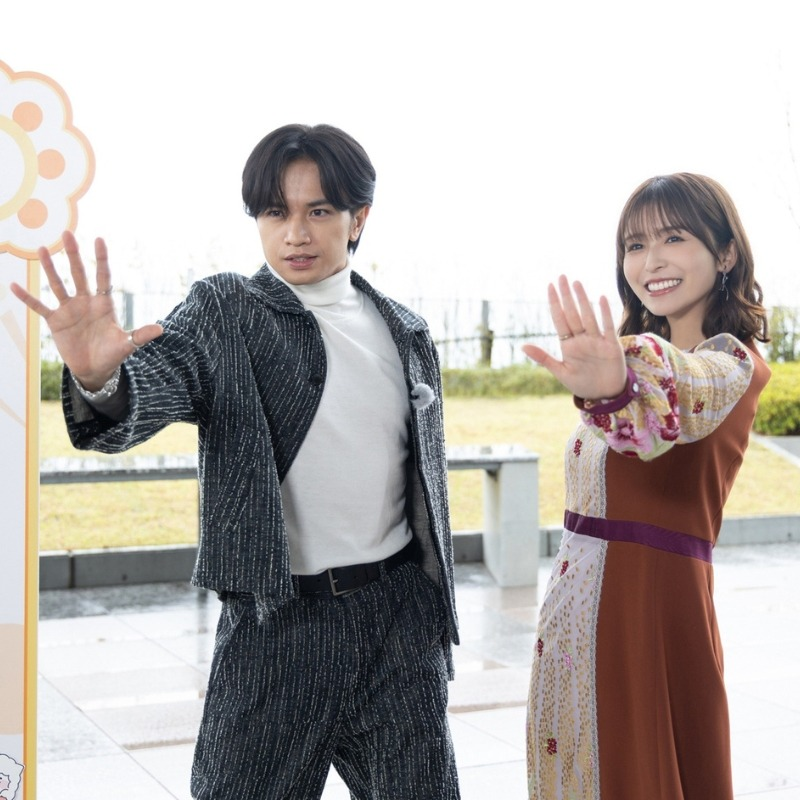
At one point, the producer asks the two lead actors to perform a short dance routine to promote the drama online. The choreography is intentionally simple and even a little cheesy with one clear goal: to create a viral trend and encourage people to watch the series.
The scene is humorous, but it also reflects a growing reality in Japan's entertainment industry. Today, a successful social media campaign can play a significant role in determining whether a drama becomes a hit.
Level 3: A Reflection on Acting, Talent, Self-Confidence, and the Impact We Have on Others
For me, this final layer is the most interesting. Beneath its romantic comedy surface, Love≠Comedy offers a thoughtful reflection on acting, self-confidence, and the influence we can have on the people around us.
Kanzaki Reiji is a successful idol. He is handsome, popular, and already has an impressive career. Yet he becomes consumed by his desire to be recognized as a "real" actor and to win a prestigious acting award.
Ironically, Reiji has always been a dedicated actor. From the very beginning of his career, he wanted to do his job well, respect the people he worked with, and give his best performance. But after years of hearing that he is simply "the handsome guy" professional, reliable, and easy to work with he gradually traps himself in that image and loses sight of what truly makes him special.
It is Minamikaze Misato who first begins to change his perspective. She reminds him that, as an artist, he already has a meaningful impact on many people's lives, whether they are his fans or the colleagues he works with every day. His value cannot be measured solely by awards or critical recognition.
Another turning point comes when Reiji meets an older actor who is considered a "has-been" after spending years being compared to another actor with the same name. Although his career never reached the same heights, he continues to perform with genuine passion and sincerity.
Through this encounter, Reiji realizes that a great actor is not defined by the prestige of the films they appear in. A romantic comedy also requires real acting skill, and making a performance feel sincere is no easy task.This idea is reinforced later by the producer. She explains that Reiji was not cast simply because of his appearance. He was chosen because he is the actor who understands this type of role better than anyone else. He has a unique ability to bring a romantic comedy hero to life, and that is exactly what the production was looking for. I found this message particularly powerful. We often stop recognizing our own strengths because they come naturally to us or because we constantly compare ourselves to others. Yet those strengths are still there, even if we no longer see them ourselves.
In the end, the film's message is simple, but deeply effective. Everyone goes through moments of self-doubt and questions their own talent. During those times, we sometimes need to accept that other people can see qualities in us that we are unable to recognize ourselves.
What About the Romance?
For a film called Love≠Comedy, this is far from a conventional romantic comedy. Romance is certainly present, but it never takes center stage. Instead, it is used as a source of humor and as a way to develop the relationship between the two main characters. More importantly, it serves as a believable way to explore their personal growth and changing perspectives.
But is it really a romance?
The film's final scene leaves that question open to interpretation and I'll let you decide for yourself.
Love≠Comedy: A Refreshing Trip to the Movies
In the end, Love≠Comedy isn't the most memorable film I've seen in recent years. Even so, I genuinely enjoyed it thanks to its multiple layers of storytelling and the many ways it connects with reality.

Fans of Nakajima Kento will appreciate the many references to his career. Film lovers will enjoy the behind-the-scenes look at how a Japanese TV drama is made and the teamwork that goes into every production. And beyond that, the film offers a heartfelt reflection on acting, self-doubt, self-confidence, and the impact we can have on the people around us.
It may not be a perfect film, but it is a sincere one. At its core, it is a story about passion, hard work, perseverance, and the desire to keep improving. That sincerity is what makes it such an enjoyable watch.
As I left the theater, I realized that
Love≠Comedy isn't really a film about love. It's a film about people striving to become the best versions of themselves while learning to accept both their own strengths and those of others, as well as the realities they cannot control.
And that's probably what makes it far more interesting than it first appears.


Comments